Remote work stopped being a pandemic necessity and became a permanent fixture of how business operates. But the landscape has shifted dramatically from those chaotic early days when every company was scrambling to figure out Zoom. The remote job market in 2026 is more competitive, more sophisticated, and frankly, more rewarding for people who know where to look and how to position themselves.
The statistics tell an interesting story. Remote job postings have stabilized at around 15-20% of all job listings, down from the peak of 2021-2022 but way up from the 2-3% before COVID. What changed isn’t the quantity – it’s the quality and the pay. Companies have figured out which roles work remotely and which don’t. They’ve built actual infrastructure for distributed teams. And they’re willing to pay competitive salaries for talent they can access anywhere.
The catch is competition got fiercer. When a job can be done from anywhere, you’re not just competing with local candidates anymore. You’re up against people from across the country, sometimes across the world. Standing out requires understanding which industries are genuinely committed to remote work and how to make yourself the obvious choice despite never meeting the hiring manager in person.
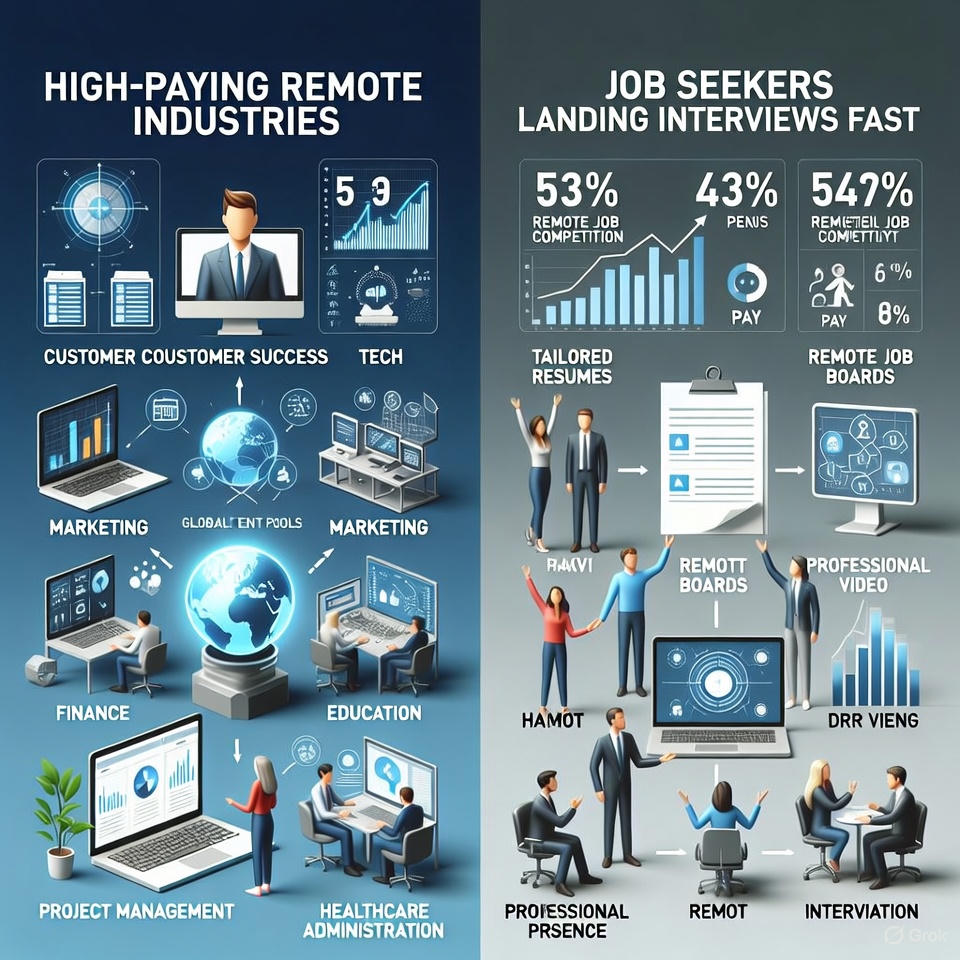
Tech and Software Development
This one’s obvious but needs to be said because it’s still the single largest category of high-paying remote work. Software engineers, product managers, UX designers, data analysts – these roles went remote early and stayed remote even when other industries pulled back.
The pay remains excellent. Mid-level software engineers are pulling $100k to $150k at established companies, sometimes significantly more at startups flush with funding or at major tech firms. Senior positions easily hit $200k+. And these are often true remote positions, not “remote for now but we might change our minds” situations.
What’s changed is companies got pickier about who they hire remotely. Early pandemic remote hiring was desperate – they needed people immediately and would take chances on candidates they might not have considered before. Now they want proof you can work independently, communicate effectively in writing, and deliver without constant oversight.
If you’re breaking into tech remotely, the portfolio matters more than ever. GitHub contributions for developers, case studies for designers, sample analyses for data people. Companies hiring remote workers want evidence you can do the work without someone physically looking over your shoulder. Showing rather than telling becomes critical.
The application process for remote tech jobs is also more structured than it used to be. Expect multiple rounds – initial screen, technical assessment, team interviews, often a take-home project. This weeds out people who aren’t serious and gives companies confidence they’re hiring someone who can actually perform. On your end, it means preparing thoroughly and treating the process like a marathon, not a sprint.
Customer Success and Account Management
This is the hidden goldmine that a lot of job seekers overlook. SaaS companies – software-as-a-service businesses selling subscriptions to other companies – need armies of customer success managers, account executives, and support specialists. These roles are relationship-focused but don’t require you to be in an office.
The pay is solid. Customer success managers at B2B companies typically earn $60k to $90k base, often with performance bonuses or commissions that can add another $20k to $40k. Senior account managers handling enterprise clients can push past $120k total compensation. Not quite software engineer money, but excellent for roles that don’t require technical degrees.
What makes these roles particularly accessible is companies care more about communication skills and business sense than specific credentials. You don’t need a computer science degree. You need to understand how businesses work, how to build relationships through video calls and emails, and how to solve problems for customers without being in the same room.
The remote interview process for these roles focuses heavily on your communication style. Can you build rapport on a video call? Can you explain complex ideas clearly in writing? Can you handle objections or difficult situations professionally? Practice your video presence – lighting, background, eye contact with the camera. It matters more than you think when the job is entirely remote.
Marketing and Content Creation
Digital marketing went fully distributed and mostly stayed that way. Content writers, SEO specialists, social media managers, email marketers, paid ads specialists – companies have realized these roles work fine remotely and often better because marketing talent is geographically distributed.
Pay varies widely based on experience and specialization. Entry-level content writers might start around $45k to $55k. Experienced SEO specialists or paid ads managers can pull $80k to $120k. Marketing directors overseeing remote teams often exceed $150k. The range reflects the broad nature of “marketing” as a category.
The key to landing remote marketing roles is demonstrating results, not just activity. Companies don’t care that you “managed social media accounts” – they want to know you grew following by X%, increased engagement by Y%, or drove Z dollars in revenue. Marketing is measurable, and remote employers want proof you can deliver outcomes without supervision.
Building a portfolio for remote marketing jobs means showcasing actual work with real results. If you’re currently employed, document your wins carefully. If you’re trying to break in, consider doing project-based work for small businesses or nonprofits to build case studies. The investment of unpaid or low-paid work early can pay off substantially when you’re competing for good remote positions.
Project Management
Every company needs people who can keep projects on track, coordinate between teams, manage timelines, and ensure things actually get done. Project managers became even more critical in remote environments because the informal coordination that used to happen around office water coolers disappeared.
Compensation for remote project managers is strong. Entry-level or associate PMs might start around $60k to $75k. Experienced PMs managing complex projects or programs typically earn $90k to $130k. Senior program managers at large companies can exceed $150k.
The certification question comes up constantly with project management. Do you need a PMP (Project Management Professional) or similar credential? It helps, especially for certain industries like construction or healthcare, but it’s not always required for tech companies or startups. Many successful remote PMs built their expertise through experience rather than formal certification.
What matters more for remote PM roles is your ability to create clarity from chaos without being physically present. You need to be exceptional at documentation, follow-up, and communication. When team members are scattered across time zones, the PM who can keep everyone aligned through clear written updates and well-run virtual meetings becomes invaluable.
Finance and Accounting
This surprised a lot of people, but accounting and finance roles adapted to remote work better than expected. Bookkeepers, financial analysts, controllers, even CFOs are working remotely at companies that five years ago would have insisted these roles needed to be on-site.
The pay is reliably good. Remote bookkeepers earn $45k to $65k. Financial analysts typically make $65k to $95k. Controllers and finance managers often pull $100k to $150k. CFO roles at mid-size companies can significantly exceed that, especially if there’s equity involved.
The barrier to entry is credentials matter here more than in some other remote fields. A CPA license opens a lot of doors. Experience with specific accounting software – QuickBooks, Xero, NetSuite – gets your resume noticed. These roles require technical competency that needs to be proven upfront.
For remote finance interviews, expect technical assessments. You might be asked to analyze financial statements, build a model in Excel, or explain accounting concepts. The companies hiring remotely for these roles need confidence you actually know what you’re doing because there’s less opportunity for oversight and correction if you don’t.
Education and Training
Online education exploded and created a sustained market for remote educators, instructional designers, curriculum developers, and corporate trainers. This isn’t just K-12 teachers pivoting to online schools – it’s a huge ecosystem of adult education, professional development, and corporate training.
Pay varies significantly. Online tutors might earn $25 to $60 per hour. Corporate trainers often make $60k to $85k. Instructional designers at education companies or corporate learning departments typically earn $70k to $100k. Senior roles in curriculum development or learning experience design can exceed $120k.
The growth area within this field is corporate learning and development. Companies spend billions training their workforces, and they need people who can design effective online training, facilitate virtual workshops, and measure learning outcomes. If you have expertise in any professional domain and can teach it effectively online, there’s probably a company willing to pay you to train their employees.
Breaking into remote education roles often means starting with contract or part-time work to build credibility. Many successful online educators began by teaching a few courses on platforms like Coursera, Udemy, or corporate learning management systems, proved they could engage students virtually, then leveraged that into full-time remote positions.
Healthcare Administration
This one catches people off guard because healthcare seems like an inherently in-person industry. But the administrative side – medical billing, coding, healthcare IT, practice management, insurance coordination – has moved substantially remote.
Medical billing and coding roles typically pay $40k to $60k. Healthcare IT specialists earn $65k to $100k. Practice managers and healthcare administrators can make $80k to $120k. The work is detail-oriented and often requires specialized knowledge of healthcare systems, billing codes, and regulations.
The advantage of healthcare administration is the industry is enormous and growing. An aging population means more healthcare services, which means more administrative work. The jobs are stable, the demand is consistent, and once you’re certified in something like medical coding, you’re highly employable.
Certifications matter significantly in healthcare administration. CPC (Certified Professional Coder) or similar credentials are often required or strongly preferred. The good news is these certifications are achievable through online programs and don’t require years of schooling. The investment in getting certified can pay off quickly in landing a stable remote position.
How to Actually Land the Interview
Knowing which industries are hiring remotely is only half the battle. The other half is getting noticed among hundreds or thousands of applicants for desirable remote positions.
Your resume needs to explicitly address remote work capabilities. If you have prior remote experience, highlight it prominently. If you don’t, emphasize skills that matter for remote work – self-direction, written communication, virtual collaboration, time management. Companies hiring remotely want evidence you can handle the autonomy and isolation that sometimes comes with distributed work.
Cover letters matter more for remote positions than they do for on-site roles. This is your chance to demonstrate your written communication skills and make a case for why you’ll succeed in a remote environment. Generic cover letters get ignored. Specific ones that address the role, the company, and your relevant experience can be the difference between getting screened out and getting a call.
Remote-first job boards are where you should focus your search. FlexJobs, We Work Remotely, Remote.co, and the remote filters on LinkedIn are more effective than applying to on-site jobs hoping they might consider remote candidates. Companies posting on remote-specific boards have already committed to hiring distributed workers.
Networking works differently for remote jobs but it still works. Join remote-focused communities in your industry. Contribute meaningfully to discussions. Many remote positions get filled through referrals before they’re ever posted publicly. Building relationships with people already working remotely in your target field increases your chances substantially.
The interview process will test your remote presence. Use a decent webcam, not your laptop camera if possible. Get good lighting – natural light or a simple ring light makes a huge difference. Test your audio. Have a clean, professional background or use a subtle virtual background. Dress professionally from the waist up at minimum. These details signal you take remote work seriously.
Follow-up matters even more for remote positions. Send a thoughtful thank-you email after each interview stage, referencing specific discussions you had. For remote roles, hiring managers are evaluating whether you’ll stay engaged and communicative when you’re not physically in an office. Your follow-up behavior during the hiring process is a preview of how you’ll communicate as an employee.
The remote job market in 2026 rewards people who are strategic about where they focus, thorough in how they present themselves, and persistent in their search. It’s competitive, but the opportunities are real and the flexibility is genuinely life-changing once you land the right role.